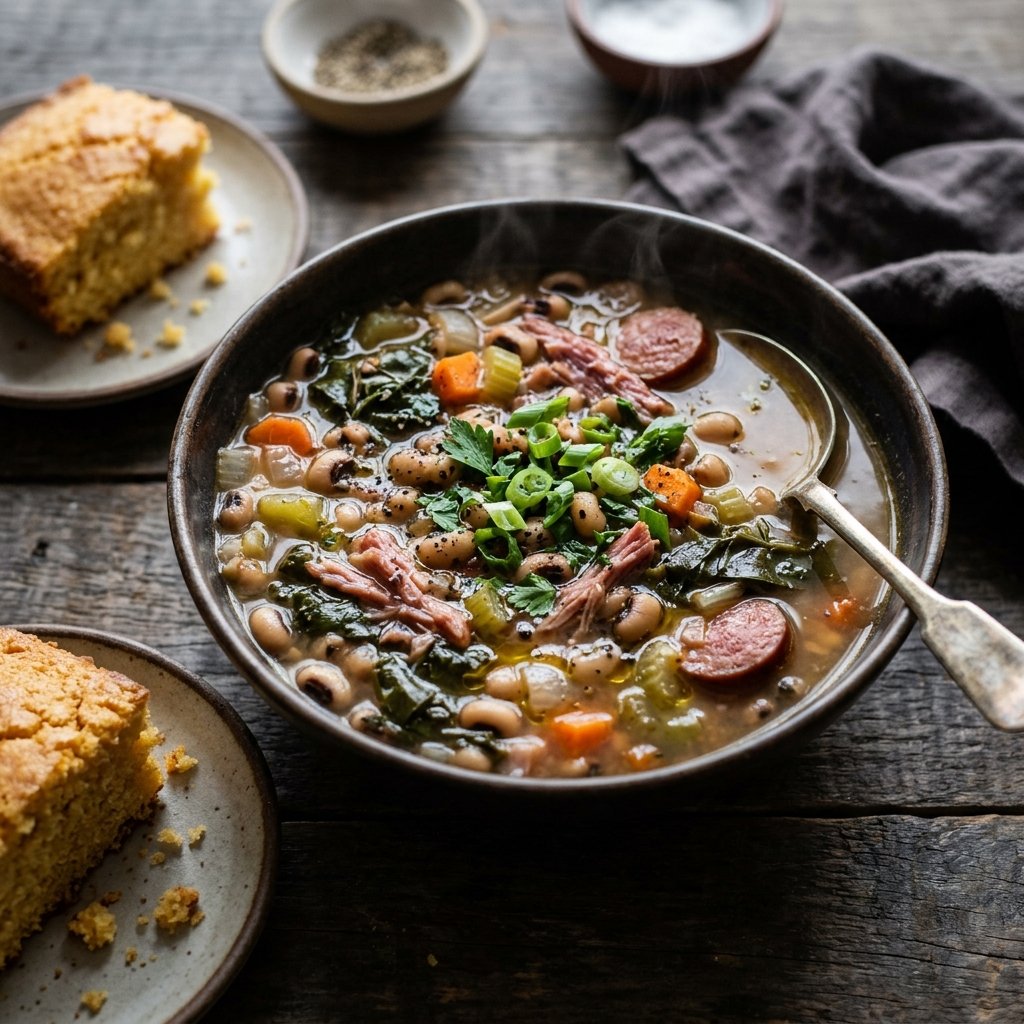
In much of the American South, January 1 doesn’t start without a pot of black-eyed peas. This New Year’s black-eyed pea soup puts the whole lucky meal into one bowl: tender peas, smoky ham hock, slices of smoked sausage, and a big handful of collard greens, all simmered in a savory broth. Serve it with a wedge of cornbread and you’ve covered every good-luck food on the list.
It’s also a practical New Year’s soup. It uses pantry staples, cooks mostly on its own, and tastes even better the next day, which helps after a late night. Below you’ll find the story behind the tradition, dried versus canned peas, the full method, Instant Pot and slow cooker versions, and a recipe card at the end.
Why Black-Eyed Peas on New Year’s Day?
The origins are told in different ways, but the tradition is closely tied to African American and Southern food history, and dishes like Hoppin’ John have been part of the New Year’s table for generations. Over time, each part of the meal picked up its own meaning:
- Black-eyed peas stand for coins, so a big bowl means a prosperous year.
- Collard greens look like folded paper money.
- Cornbread is the color of gold.
- Pork shows up because pigs root forward, a nod to moving ahead in the new year.
If you want to read more, Food Network has a good overview of why black-eyed peas and greens are eaten on New Year’s Day, and the Farmers’ Almanac covers the folklore around Hoppin’ John. This soup simply brings all of those foods together in one pot.
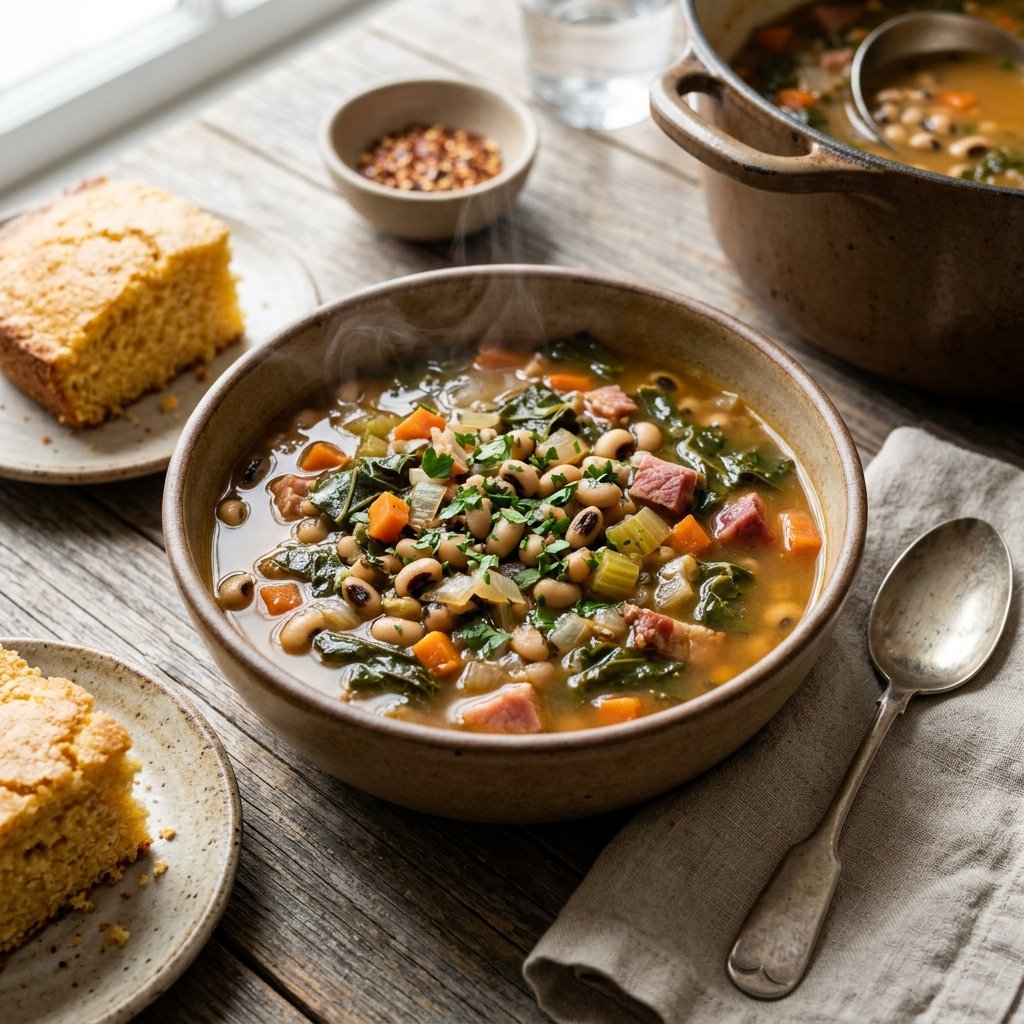
Ingredients for New Year’s Black-Eyed Pea Soup
Exact amounts are in the recipe card. Here’s what each group of ingredients brings to the pot:
- Dried black-eyed peas: One pound makes a hearty pot for 6 to 8 people. Unlike most dried beans, they don’t need an overnight soak.
- Smoked ham hock: This is where the deep, smoky flavor comes from. It also adds body to the broth. Leftover holiday ham or diced ham works if you don’t have a hock.
- Smoked sausage: Andouille brings some heat; kielbasa keeps it mild. Browning it first adds flavor to the whole pot.
- Onion, celery, bell pepper, carrot, and garlic: The classic Southern base, with carrots for a little sweetness and color.
- Smoked paprika, thyme, bay leaves, and red pepper flakes: Warm and savory without overpowering the peas.
- Low-sodium chicken broth: Low-sodium matters because the ham and sausage add plenty of salt.
- Collard greens: Sturdy enough to simmer without turning to mush. Kale or turnip greens also work.
- Apple cider vinegar: A spoonful at the end brightens all that smoke and richness.
Dried or Canned Black-Eyed Peas?
Both work for black-eyed pea soup. Dried peas give the best texture and a richer broth; canned peas get dinner on the table in under an hour.
| Dried peas | Canned peas | |
|---|---|---|
| Amount | 1 pound (450 g) | Three 15-ounce cans, drained and rinsed |
| Soaking | Optional | None |
| Simmer time | About 50 to 70 minutes | About 20 minutes |
| Texture | Creamy inside, holds shape, thickens the broth | Softer, broth stays thinner |
| Broth | 8 cups | About 6 cups |
| Best for | A slow New Year’s Day pot | A quick weeknight version |
How to Make Black-Eyed Pea Soup for New Year’s Day
- Sort and rinse the peas. Spread them on a tray, pick out any small stones or shriveled peas, and rinse well. Soaking them for a few hours shortens the cooking time a little, but it’s not required.
- Brown the sausage. Cook the sausage coins in a little oil in a large Dutch oven until browned on both sides, then set them aside. The browned bits left in the pot are pure flavor.
- Soften the vegetables. Add the onion, celery, bell pepper, and carrot to the same pot and cook for 6 to 8 minutes, scraping up the browned bits. Stir in the garlic, smoked paprika, thyme, and red pepper flakes for one minute.
- Simmer with the ham hock. Add the broth, peas, ham hock, and bay leaves. Bring to a boil, then lower to a gentle simmer, partly covered. Start checking the peas at 45 minutes; they’re ready when they’re creamy all the way through.
- Shred the ham. Lift out the ham hock, let it cool for a few minutes, and pull the meat off the bone. Discard the skin, fat, and bone, and return the meat to the pot with the sausage.
- Add the greens. Stir in the chopped collards and simmer for 15 to 20 minutes, until tender.
- Finish and season. Remove the bay leaves, stir in the vinegar, then taste and add salt and pepper. For a thicker soup, mash a cup of peas against the side of the pot and stir them back in.
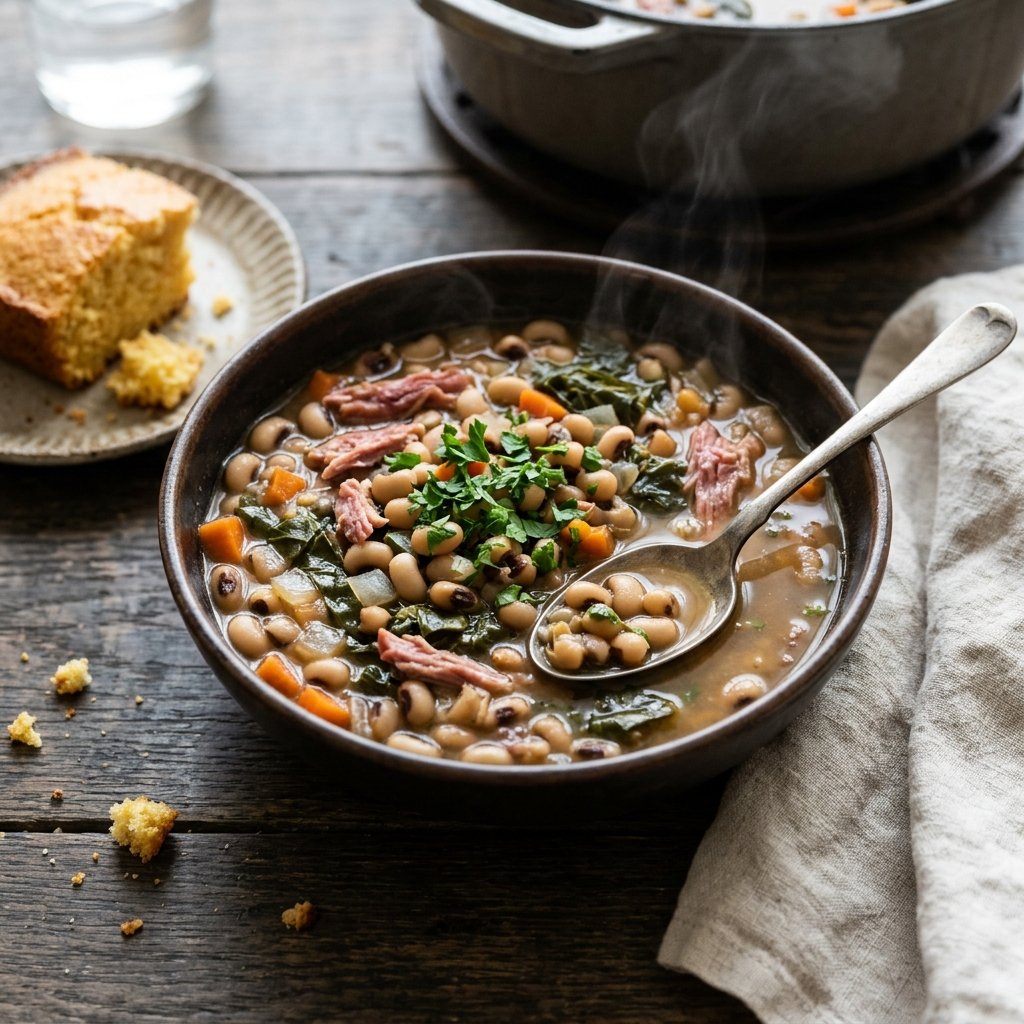
Instant Pot and Slow Cooker Black-Eyed Pea Soup
Instant Pot
To make Instant Pot black-eyed pea soup, use the sauté setting to brown the sausage and soften the vegetables, then add the broth, unsoaked peas, ham hock, and bay leaves. Cook at high pressure for about 10 minutes, then let the pressure release naturally for 10 minutes. Shred the ham, add the greens, and simmer on sauté for 10 to 15 minutes until they’re tender.
Slow Cooker
Brown the sausage and vegetables in a skillet first; it makes a real difference in the flavor of a slow cooker black-eyed pea soup. Move everything except the greens and vinegar to the slow cooker and cook on low for 7 to 8 hours, until the peas are tender. Shred the ham, stir in the collards, and cook on high for another 30 minutes.
Tips for the Best Southern Black-Eyed Pea Soup
- Salt at the end. Ham hocks and sausage vary a lot in saltiness, so taste after the ham goes back in.
- Use fresh peas from the store. Dried peas that have been in the pantry for years can stay firm no matter how long they cook.
- Hold the tomatoes until the end. If you add canned tomatoes, stir them in after the peas are tender. Acid can slow down softening.
- Don’t skip the vinegar. It’s a small amount, but it keeps the soup from tasting flat. A few dashes of hot sauce at the table do the same job.
- Let it rest. Like most bean soups, this one thickens and gets better overnight. Add a splash of broth when you reheat it.
Ways to Change It Up
- Vegetarian: Skip the meat, use vegetable broth, and add 8 ounces of browned mushrooms plus an extra teaspoon of smoked paprika for smoky depth.
- Lighter: Use smoked turkey sausage and a smoked turkey wing in place of the pork.
- Cajun-style: Use andouille, add a can of diced tomatoes at the end, and season with Cajun spice.
- Different greens: Kale works the same way as collards. Spinach only needs a minute or two at the very end.
What to Serve with This New Year’s Soup
Cornbread is the classic partner for black-eyed pea soup, both for luck and for soaking up the broth. This Jiffy Mexican cornbread is quick and adds a little heat. A bowl of rice on the side turns it into something close to Hoppin’ John, and a bottle of hot sauce on the table never hurts.
If you love a hearty pot of beans, try these Blue Runner red beans, this Camellia red bean recipe, or these Peruvian lentils next.
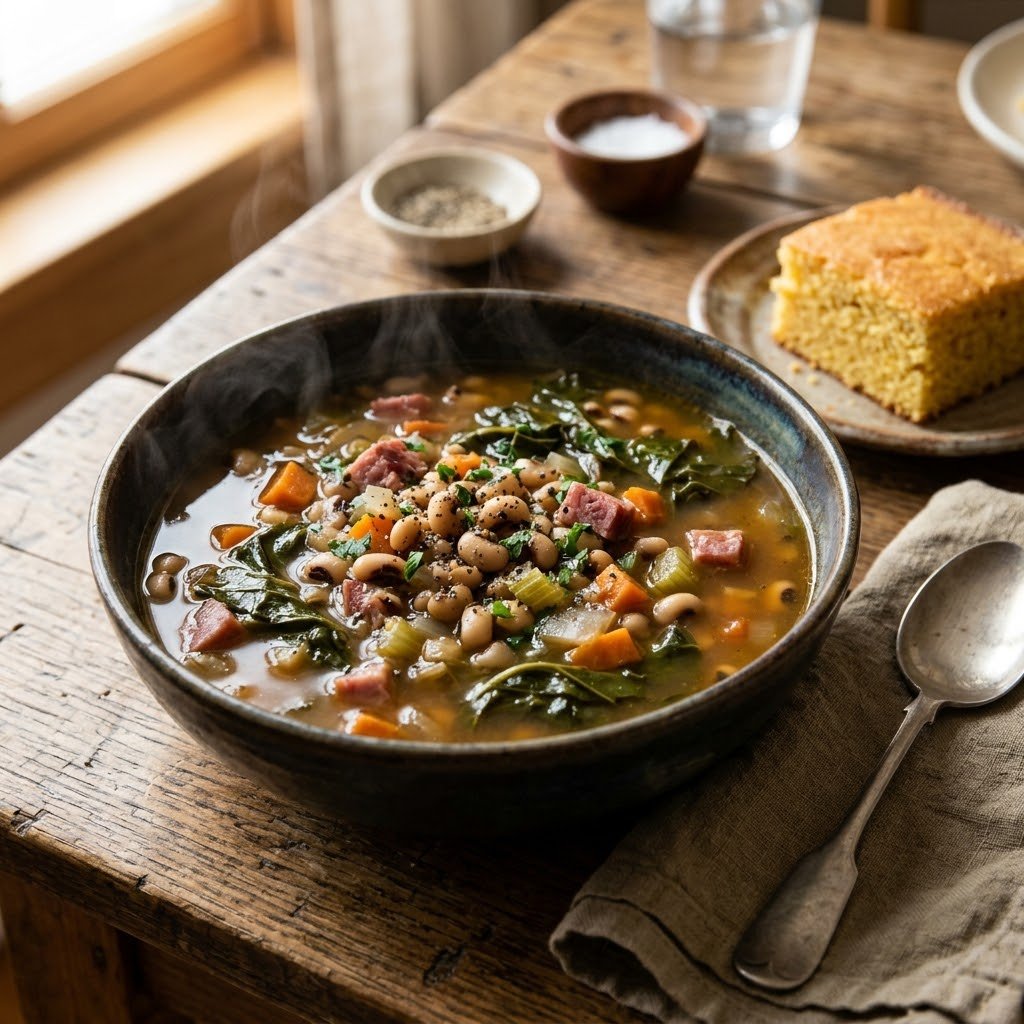
Storing, Freezing, and Reheating Black-Eyed Pea Soup
- Fridge: Cool the black-eyed pea soup and refrigerate it in airtight containers within two hours of cooking. It keeps for 3 to 4 days, in line with the FoodSafety.gov cold storage guidelines for soups and stews.
- Freezer: Freeze in portions for 2 to 3 months. Leave some room at the top of the container, since the soup expands as it freezes.
- Reheating: Warm it on the stove over medium heat until it’s hot all the way through, adding broth or water to loosen it.
Black-Eyed Pea Soup FAQ
Do I need to soak black-eyed peas before making black-eyed pea soup?
No. Black-eyed peas are smaller and thinner-skinned than most dried beans, so they cook through without soaking. Soaking for a few hours trims the simmer time slightly, but the soup turns out well either way.
Why are my black-eyed peas still hard?
The most common reasons are old dried peas, very hard water, or adding acidic ingredients like tomatoes or vinegar too early. Keep simmering, add more broth if needed, and save the acid for the end.
Can I make this New Year’s soup ahead?
Yes. Make it on December 31 and reheat it on New Year’s Day. The flavor improves overnight. If you want the greens to stay bright, you can stir them in while reheating instead.
Can I use leftover holiday ham?
Absolutely. Use 2 cups of diced ham in place of the hock, and add the ham bone to the pot during simmering if you saved it. Remove the bone before serving.
Is black-eyed pea soup gluten-free?
The peas, vegetables, and spices are naturally gluten-free, but some sausages and broths are not. Check the labels if you’re cooking for someone who avoids gluten.
New Year’s Black-Eyed Pea Soup Recipe
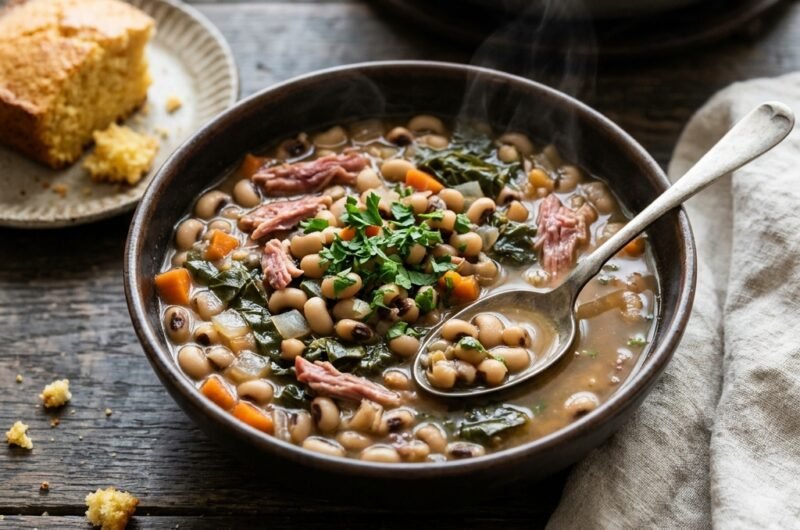
New Year’s Black-Eyed Pea Soup with Ham and Collard Greens
A hearty New Year’s black-eyed pea soup with smoked ham hock, sausage, and collard greens. Made in one pot, great for New Year’s Day luck, and even better the next day.
6-8
servings20
minutes1
hour30
minutes1
hour50
minutesIngredients
- For the soup
1 pound (450 g) dried black-eyed peas, sorted and rinsed
1 smoked ham hock (about 1 pound / 450 g)
8 ounces (225 g) smoked sausage (andouille or kielbasa), sliced into coins
1 tablespoon olive oil
1 large yellow onion, diced
2 celery ribs, diced
1 green bell pepper, diced
2 medium carrots, diced
4 garlic cloves, minced
1 teaspoon smoked paprika
1 teaspoon dried thyme
¼ to ½ teaspoon crushed red pepper flakes (optional)
2 bay leaves
8 cups (2 liters) low-sodium chicken broth
1 bunch collard greens (about 8 ounces / 225 g), stems removed, chopped
1 tablespoon apple cider vinegar
Salt and black pepper, to taste
- For serving
Sliced green onions
Hot sauce
Cornbread
Directions
- Prep the peas
Spread the peas on a tray, remove any small stones or shriveled peas, and rinse well. Soaking is optional. - Brown the sausage
Heat the oil in a large Dutch oven over medium-high heat. Add the sausage and cook for 4 to 5 minutes, until browned. Transfer to a plate. - Cook the vegetables
Lower the heat to medium. Add the onion, celery, bell pepper, and carrots and cook for 6 to 8 minutes, scraping up the browned bits. Stir in the garlic, smoked paprika, thyme, and red pepper flakes and cook for 1 minute. - Simmer
Add the broth, peas, ham hock, and bay leaves. Bring to a boil, then reduce to a gentle simmer, partly covered. Cook for 50 to 70 minutes, stirring now and then, until the peas are creamy all the way through. - Shred the ham
Remove the ham hock, let it cool slightly, and shred the meat. Discard the skin, fat, and bone. Return the meat and the browned sausage to the pot. - Add the greens
Stir in the collard greens and simmer for 15 to 20 minutes, until tender. Add more broth if the soup gets too thick. - Season and serve
Remove the bay leaves. Stir in the vinegar and season with salt and pepper. For a thicker soup, mash some of the peas against the side of the pot. Serve with green onions, hot sauce, and cornbread.
Notes
- Canned peas: use three 15-ounce cans, drained and rinsed, 2 cups diced ham instead of the hock, and about 6 cups broth. Simmer for 20 minutes before adding the greens.
- Instant Pot: cook at high pressure for about 10 minutes with a 10-minute natural release, then add the greens on sauté.
- Slow cooker: cook on low for 7 to 8 hours, then add the greens and cook on high for 30 minutes.
- Season with salt only at the end, since ham hocks and sausage vary in saltiness.