
Biko is what shows up on the table when Filipino families gather: a tray of dark, glossy, chewy rice squares, cut a little unevenly, with crunchy coconut bits scattered on top. It is sweet without being cloying, rich from coconut milk, and deeply satisfying in a way that only sticky rice can be. This easy biko recipe uses just a handful of pantry ingredients and one simple idea: cook the rice, make a coconut caramel, then stir the two together until they become one.
You don’t need special equipment, and you don’t need to have grown up eating kakanin (the Filipino family of rice cakes) to get it right. The main thing biko asks for is about 20 minutes of steady stirring. Everything else is forgiving.
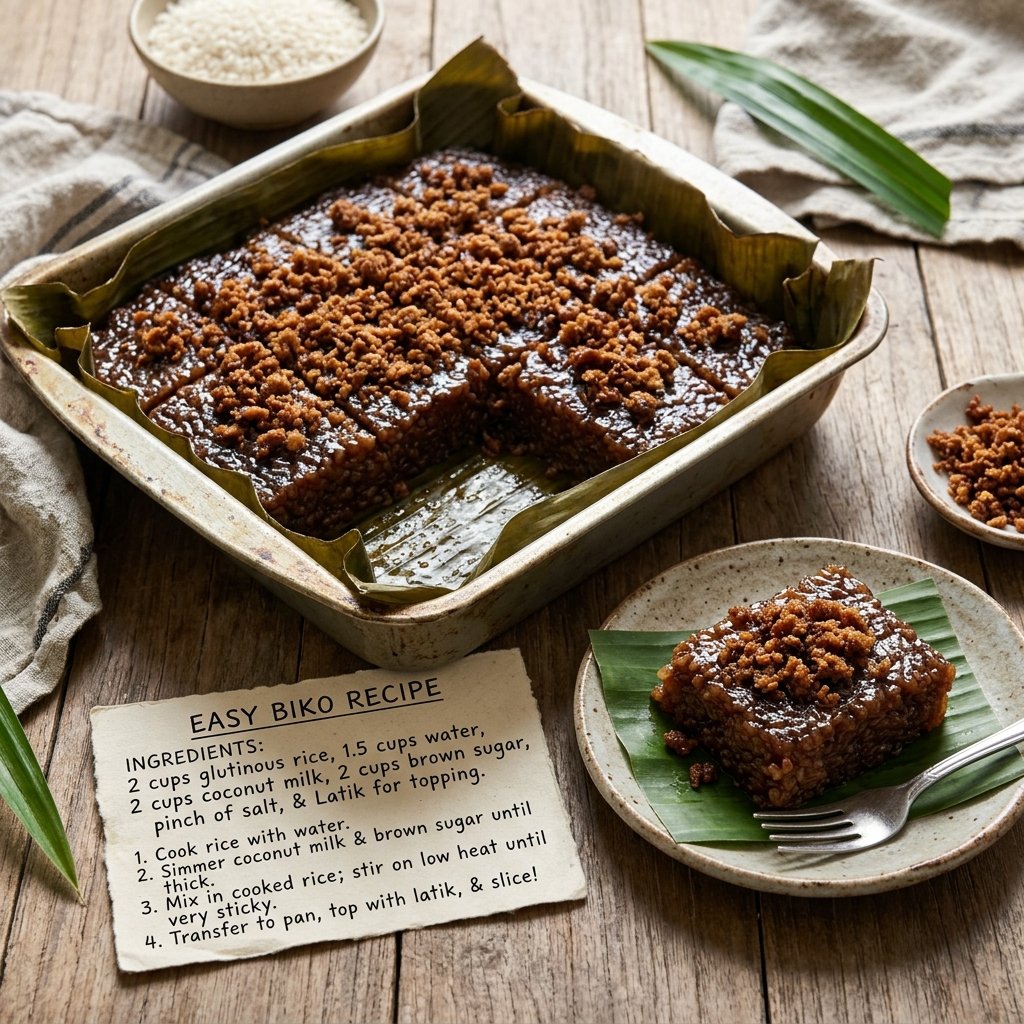
Biko at a Glance
- What it is: Filipino sticky rice cake cooked in coconut milk and brown sugar.
- Texture: Chewy, dense and moist, with a sticky caramel coating on every grain.
- Key ingredients: Glutinous rice, coconut milk, dark brown sugar, salt.
- Topping: Latik, the toasted coconut curds made by cooking coconut cream until the oil separates.
- Time: About 1 hour of cooking, plus 30 minutes to cool.
- Makes: One 9×9-inch pan, about 16 squares.
What Is Biko?
Biko is one of the best-known Filipino rice cakes. Glutinous rice is cooked, then simmered in a reduction of coconut milk and sugar until thick enough to set in a pan. In some regions, especially in the Southern Tagalog provinces, a very similar dish is called sinukmani. It is a fixture at fiestas, birthdays, holidays and family reunions, and it is also a common merienda, the afternoon snack many Filipinos enjoy with coffee.
What sets biko apart from other kakanin is that the rice grains stay mostly whole. It isn’t ground into a flour or pounded into a paste. You can see and feel each grain, held together by the coconut caramel.
The Three Parts of an Easy Biko Recipe
It helps to think of biko as three small recipes that come together at the end. Once you see it this way, the process feels much simpler.
1. The rice
Glutinous rice, also sold as sweet rice, sticky rice or malagkit, is essential. Despite the name, it contains no gluten. It is high in amylopectin, a type of starch that makes the cooked grains cling together. Regular long-grain rice, jasmine or basmati won’t work here; they cook up separate and fluffy, and the cake won’t hold.
The rice is partly cooked first, with water and a little coconut milk. It should be tender but not mushy, because it will keep cooking in the caramel.
2. The coconut caramel
Coconut milk, dark brown sugar and a pinch of salt are simmered until the mixture thickens into a glossy, toffee-colored syrup. This is where most of biko’s flavor comes from. Dark brown sugar gives a deeper molasses taste and that signature dark color. Traditional cooks often use muscovado or panutsa (a solid Filipino cane sugar), which are even richer.
3. The latik
Latik is the crunchy, nutty topping. Coconut cream is simmered slowly until the water evaporates, the coconut oil separates out, and the remaining solids fry in that oil until golden brown. You get two bonuses from this step: crisp coconut curds for the top and fragrant coconut oil for greasing the pan.
Ingredients You’ll Need
Exact amounts are in the recipe card below. Here is the shopping list with a few notes:
- Glutinous rice (2 cups). Look in Asian grocery stores or the international aisle. Thai sweet rice works perfectly.
- Full-fat coconut milk (about 2 1/2 cups). Two 13.5-ounce cans give you a little extra. Light coconut milk makes a less rich, less glossy biko.
- Coconut cream (one 13.5-ounce can) for the latik. Full-fat coconut milk also works but takes longer to reduce.
- Dark brown sugar (1 1/2 cups, packed). Muscovado is a great swap.
- Salt (1/2 teaspoon). Small, but it balances the sweetness.
- Banana leaves (optional). Found frozen in many Asian and Latin American markets. They add a gentle, grassy aroma and make removing slices easier.
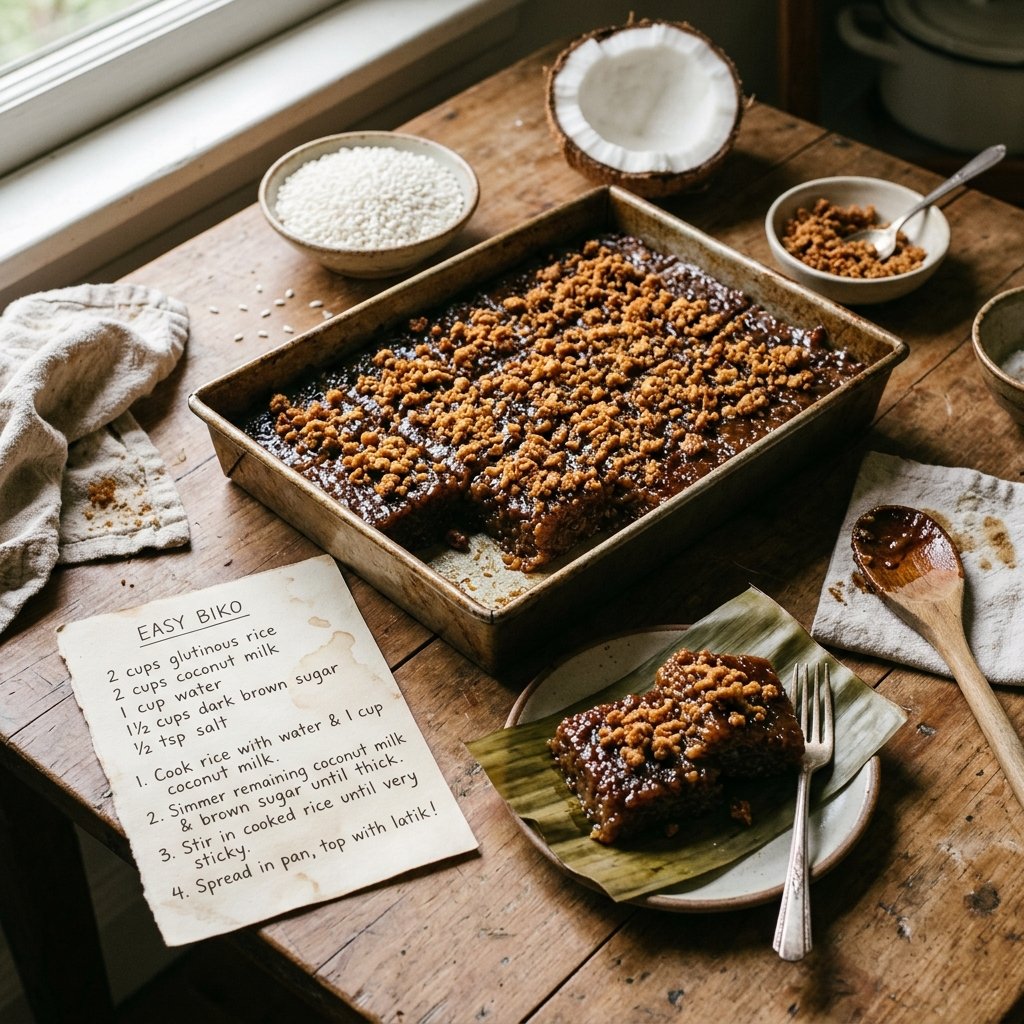
How to Make Easy Biko, Step by Step
Step 1: Start the latik first
Because latik takes the longest and needs only occasional attention, start it before anything else. Pour the coconut cream into a wide nonstick skillet over medium heat. It will bubble, then thicken, then look oily and split. Keep stirring every few minutes. After 25 to 35 minutes, the solids will turn into small golden-brown clumps sitting in clear coconut oil. Pull it off the heat as soon as the curds are golden; they darken quickly at the end. Strain, saving the oil.
Step 2: Cook the rice
Rinse the glutinous rice two or three times, until the water is mostly clear. Combine it with 1 1/2 cups water and 1/2 cup coconut milk in a rice cooker, or in a covered saucepan over low heat for about 20 minutes. Soaking isn’t required for this method, though soaking for an hour first gives slightly softer grains.
Step 3: Prepare the pan
Line a 9×9-inch pan with banana leaves. Pass them briefly over a flame or dip them in hot water to soften so they don’t crack. Brush with a little latik oil. No banana leaves? Just grease the pan well with the coconut oil.
Step 4: Make the coconut caramel
In a large, wide pot (wider is better, since it evaporates faster), combine 2 cups coconut milk, the brown sugar and salt. Bring to a simmer over medium heat and stir often. In 10 to 15 minutes it will reduce and thicken to a glossy syrup that coats the back of a spoon.
Step 5: Combine and stir
Add the cooked rice to the caramel and fold it in until every grain is coated. Lower the heat to medium-low. Now comes the part that matters most: keep stirring and folding with a sturdy wooden spoon or spatula for 15 to 20 minutes. The mixture will get heavier and harder to move. It’s ready when it is very thick, glossy, and starts pulling away from the sides of the pot in one mass.
Step 6: Spread, top and cool
Transfer the biko into the pan and press it flat with a greased spatula or a folded banana leaf. Sprinkle the latik evenly over the top. Let it cool for at least 30 minutes. Warm biko is soft and tastes wonderful, but it needs time to firm up enough to slice cleanly. Use an oiled knife.
Should You Bake Biko?
Many home cooks skip the oven entirely, and the stovetop method in this easy biko recipe gives a fully cooked cake. Baking is optional. Fifteen to twenty minutes at 350°F dries the surface slightly and creates a firmer, more set top, which some people prefer for neat squares or for travel. If you’d like a sticky caramel top instead of latik, reserve about half a cup of the coconut caramel, spread it over the biko, and bake until it bubbles and darkens.
Biko vs. Other Filipino Rice Cakes
If you’re new to kakanin, the names can be confusing. Here’s how biko compares with a few close relatives:
| Rice cake | Main base | Texture | How it is cooked |
|---|---|---|---|
| Biko | Whole glutinous rice grains | Chewy, sticky, grains visible | Stovetop, optional bake |
| Sinukmani | Whole glutinous rice grains | Very similar to biko | Stovetop; regional name for a similar dish |
| Suman | Glutinous rice | Firm, chewy log | Wrapped in leaves and steamed or boiled |
| Kalamay | Ground glutinous rice | Smooth, very sticky | Cooked down into a thick paste |
| Bibingka | Rice flour batter | Soft, cake-like | Baked, traditionally over coals |
Mistakes to Avoid
- Using the wrong rice. Only glutinous rice gives biko its chew. Everything else falls apart.
- Undercooking the caramel. If the coconut milk and sugar don’t reduce enough before the rice goes in, you’ll spend far longer stirring and the biko can stay wet.
- Stopping the stir too early. Biko that hasn’t been cooked down enough won’t hold its shape when sliced. Wait until it pulls away from the pot.
- Walking away from the latik. Latik goes from golden to burnt in a minute or two near the end. Stay close once the curds start coloring.
- Slicing too soon. Patience gives clean squares.
- A narrow pot. A deep, narrow pot makes the caramel take much longer to reduce and makes stirring harder.
Easy Variations
- Biko with langka: Fold in 1 cup of chopped ripe jackfruit (fresh or jarred in syrup, drained) during the last few minutes of stirring.
- Ube biko: Stir 1/2 cup ube halaya and 1 teaspoon ube extract into the caramel for a purple version.
- Pandan biko: Simmer two knotted pandan leaves in the coconut milk while you cook the rice, or add a few drops of pandan extract.
- Quick topping: No time for latik? Toast unsweetened shredded coconut in a dry pan until golden and scatter it on top.
- Less sweet: Reduce the sugar to 1 1/4 cups. The cake will be slightly softer and a little less dark.
How to Serve Biko
Biko is usually served at room temperature, cut into squares, sometimes on a piece of banana leaf. It pairs well with strong black coffee or hot tea, which balance the sweetness. It also travels well, which is why it is so popular for potlucks and holiday tables. If you’re building a dessert spread, it sits nicely alongside lighter sweets like homemade honey marshmallows, or other easy crowd-pleasers such as this pecan pie dump cake. For more desserts from warm-weather kitchens, see our Cuban dessert recipes.
Storing and Reheating Biko
- Room temperature: Covered, for up to 1 day. Coconut milk spoils, so don’t leave it out longer, especially in warm weather.
- Refrigerator: In an airtight container for up to 5 days. It firms up when cold.
- Reheating: Microwave a square for 15 to 30 seconds with a damp paper towel over it, or steam it for a few minutes until soft and chewy again.
- Freezing: Wrap individual squares tightly and freeze for up to 2 months. Thaw in the fridge overnight, then steam or microwave. Store the latik separately in a jar so it stays crunchy.
Making Biko for a Crowd
Biko doubles well, which is handy for parties and holidays. Use a 9×13-inch pan and the widest pot you own, because the stirring stage gets heavy with twice the rice. If your pot isn’t big enough, cook two batches of caramel and rice side by side rather than crowding one pot. The latik can be made a day ahead and kept in a sealed jar at room temperature, and the coconut oil it leaves behind keeps for weeks in the fridge.
To get ahead, you can also cook the full batch the morning of your event. Biko holds its texture well for several hours at room temperature once it has set, so it doesn’t need last-minute attention. Slice it just before serving so the edges stay soft and glossy, and keep a little extra latik on the side for anyone who wants more crunch.
Easy Biko Recipe FAQ
Can I make biko in a rice cooker only?
You can cook the rice in a rice cooker, but the caramel and final stirring work best on the stove. The rice cooker can’t evaporate the liquid fast enough to get the right thickness.
Is biko gluten-free?
Yes. Glutinous rice contains no gluten. Its name refers to how sticky it is. Check labels on any extracts or added flavorings if you are cooking for someone with celiac disease.
Is biko vegan?
The basic recipe is naturally vegan: rice, coconut milk, sugar and salt. Some brown sugars are processed with bone char, so choose one labeled vegan if that matters to you.
Why is my biko too hard?
It was cooked down too long, or it’s been refrigerated. A short steam or a few seconds in the microwave brings back the softness. Next time, stop stirring as soon as it pulls away from the pot.
Why is my biko mushy?
The rice was overcooked before it went into the caramel, or the mixture wasn’t reduced enough. Cook the rice until just tender and keep stirring until the mixture is properly thick.
Can I use white sugar?
You can, but you’ll lose the caramel flavor and dark color. If that’s all you have, add 1 tablespoon of molasses per cup of white sugar.
A Simple Recipe Worth Keeping
Once you’ve made this easy biko recipe once, it becomes something you can make from memory: rice, coconut milk, brown sugar, patience. It’s the kind of dessert that disappears from the tray quickly, and it scales up easily for a crowd. Make the latik while the rice cooks, keep that spoon moving, and give it time to cool.
Easy Biko (Filipino Sticky Rice Cake)
Ingredients
Rice
- 2 cups glutinous rice also sold as sweet rice or malagkit; rinsed until water runs mostly clear
- 1 1/2 cups water
- 1/2 cup coconut milk full-fat
Coconut caramel
- 2 cups coconut milk full-fat
- 1 1/2 cups dark brown sugar packed
- 1/2 tsp salt
Latik topping
- 1 can (13.5 oz) coconut cream or full-fat coconut milk
For the pan
- banana leaves or coconut oil optional, for lining or greasing
Instructions
- Make the latik: pour the coconut cream into a wide nonstick skillet over medium heat. Simmer, stirring now and then, until the oil separates and the solids turn into golden-brown curds, 25 to 35 minutes. Strain, keeping the curds and the coconut oil separately.
- While the latik cooks, combine the rinsed rice, water and 1/2 cup coconut milk in a rice cooker or covered saucepan. Cook until the liquid is absorbed and the rice is just tender, about 20 minutes on the stove over low heat.
- Line a 9×9-inch pan with softened banana leaves or brush it with some of the coconut oil from the latik.
- In a large, wide pot, stir together 2 cups coconut milk, the brown sugar and salt. Simmer over medium heat, stirring often, until it thickens to a glossy, syrupy caramel, 10 to 15 minutes.
- Add the cooked rice to the caramel. Lower the heat and stir and fold constantly until the mixture is very thick, sticky and pulls away from the sides of the pot, 15 to 20 minutes.
- Transfer to the prepared pan and press into an even layer with a greased spatula or a piece of banana leaf. Scatter the latik over the top.
- Let the biko cool for at least 30 minutes before slicing into squares with an oiled knife.


