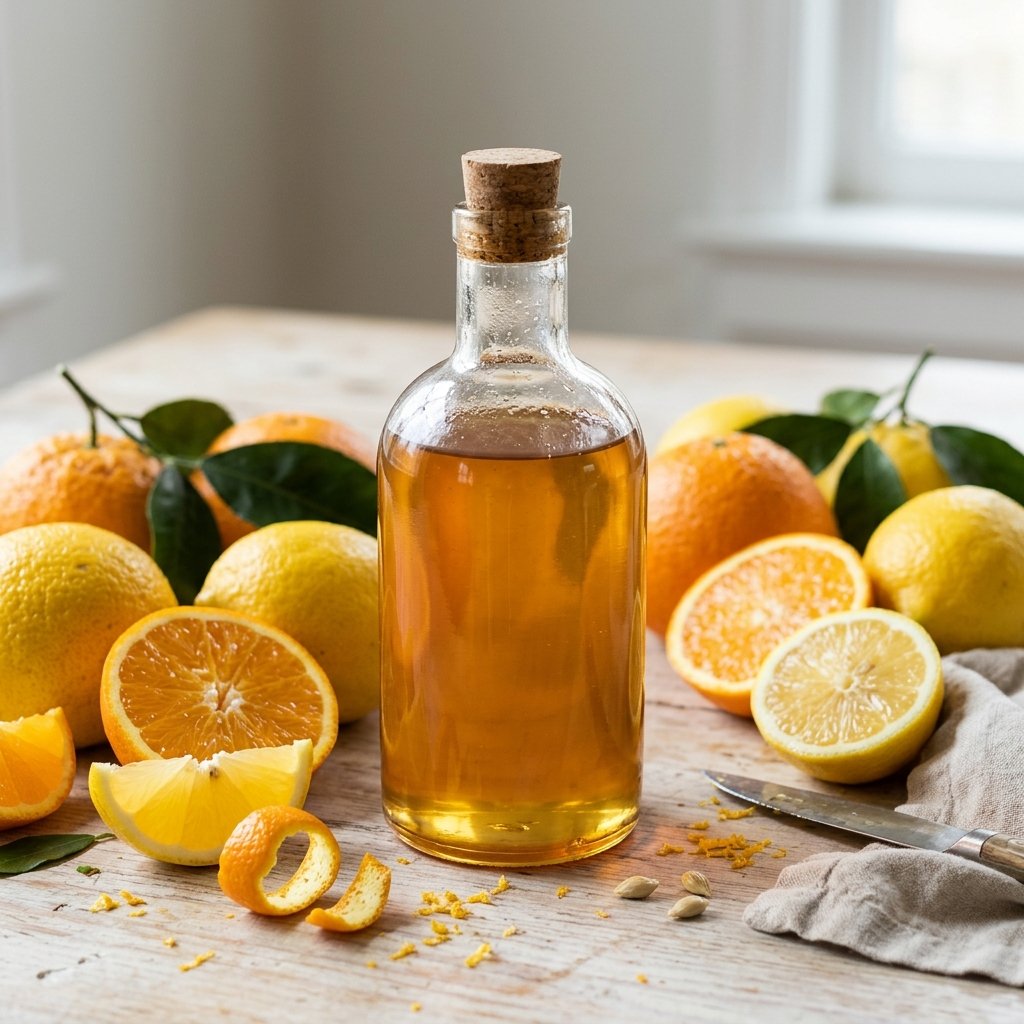
A good citrus syrup recipe does two jobs at once. It sweetens like plain simple syrup, and it carries the bright, slightly bitter perfume of orange, lemon, and lime peel into whatever you pour it on. A spoonful turns sparkling water into a quick homemade soda, finishes a whiskey sour, soaks into a warm cake, or wakes up a bowl of winter fruit.
This version simmers strips of peel in sugar syrup for depth, then stirs in fresh juice off the heat so the flavor stays sharp instead of tasting cooked. You need one small saucepan, about 15 minutes of hands-on time, and fruit that is probably already sitting in your kitchen.
What Is Citrus Syrup?
Citrus syrup is a sugar syrup flavored with citrus fruit. At its most basic it is a citrus simple syrup: equal parts sugar and water, infused with zest. Many versions, including this one, also add fresh juice, which makes the syrup tangier and more useful as a drink mixer. The result sits somewhere between a bar syrup and a fruit cordial.
You may also see oleo saccharum mentioned in the same breath. That is a no-cook method where citrus peels sit buried in sugar for several hours until the oils pull out and dissolve it (Moody Mixologist has a clear walkthrough). It is lovely, but it takes patience. The stovetop method below gets you a very similar aroma in under an hour, steeping included.
Why Peel and Juice Both Matter
- The peel carries the aroma. The fragrant oils live in the thin, colored outer layer of the skin. Gentle heat coaxes them into the syrup.
- The juice brings the acid. Without it, the syrup tastes sweet and perfumed but a little flat. A splash of juice gives it the sour edge that makes drinks taste balanced.
- The juice goes in last. Boiling fresh citrus juice dulls it and can push it toward a marmalade taste. Adding it after the pan comes off the heat keeps it fresh.
- The white pith stays out. Pith is bitter, and a long steep pulls that bitterness into the syrup. A vegetable peeler takes thin strips with very little pith attached.
Ingredients for This Citrus Syrup Recipe
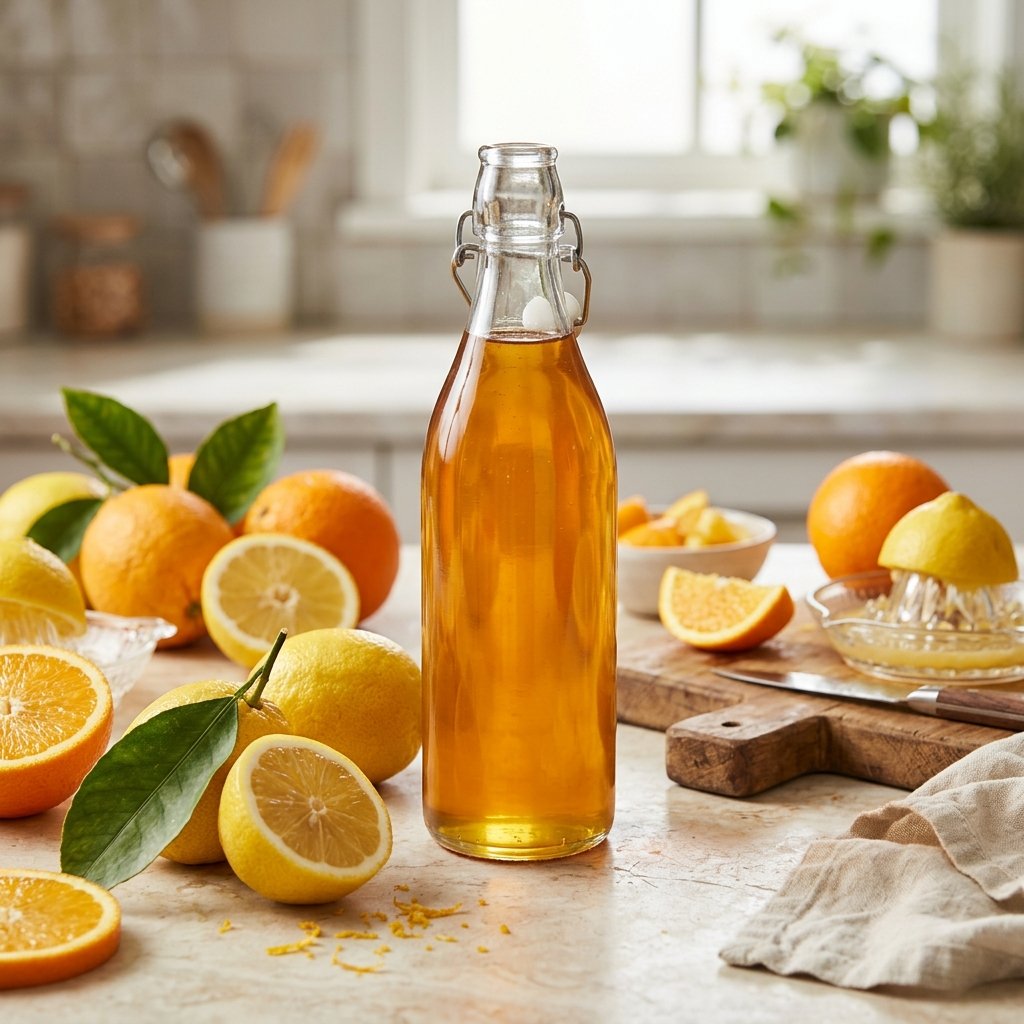
- Granulated sugar, 1 cup (200 g). Plain white sugar keeps the color golden and the flavor clean. Cane sugar works the same way.
- Water, 1 cup (240 ml). Filtered water is a nice touch if your tap water has a strong taste.
- 1 orange, 1 lemon, and 1 lime. You will use the peel from all three, then juice them.
- Fresh citrus juice, ½ cup (120 ml). A mix works best: roughly ¼ cup orange juice, 3 tablespoons lemon juice, and 1 tablespoon lime juice.
- A tiny pinch of salt (optional). You will not taste it as salt. It just rounds out the sweetness.
Since the peel goes straight into the pot, wash the fruit well. Most supermarket citrus has a thin wax coating, so scrub it under warm running water and dry it before peeling. If you can find unwaxed or organic fruit, even better.
How to Make This Citrus Syrup Recipe Step by Step
1. Peel first, juice second
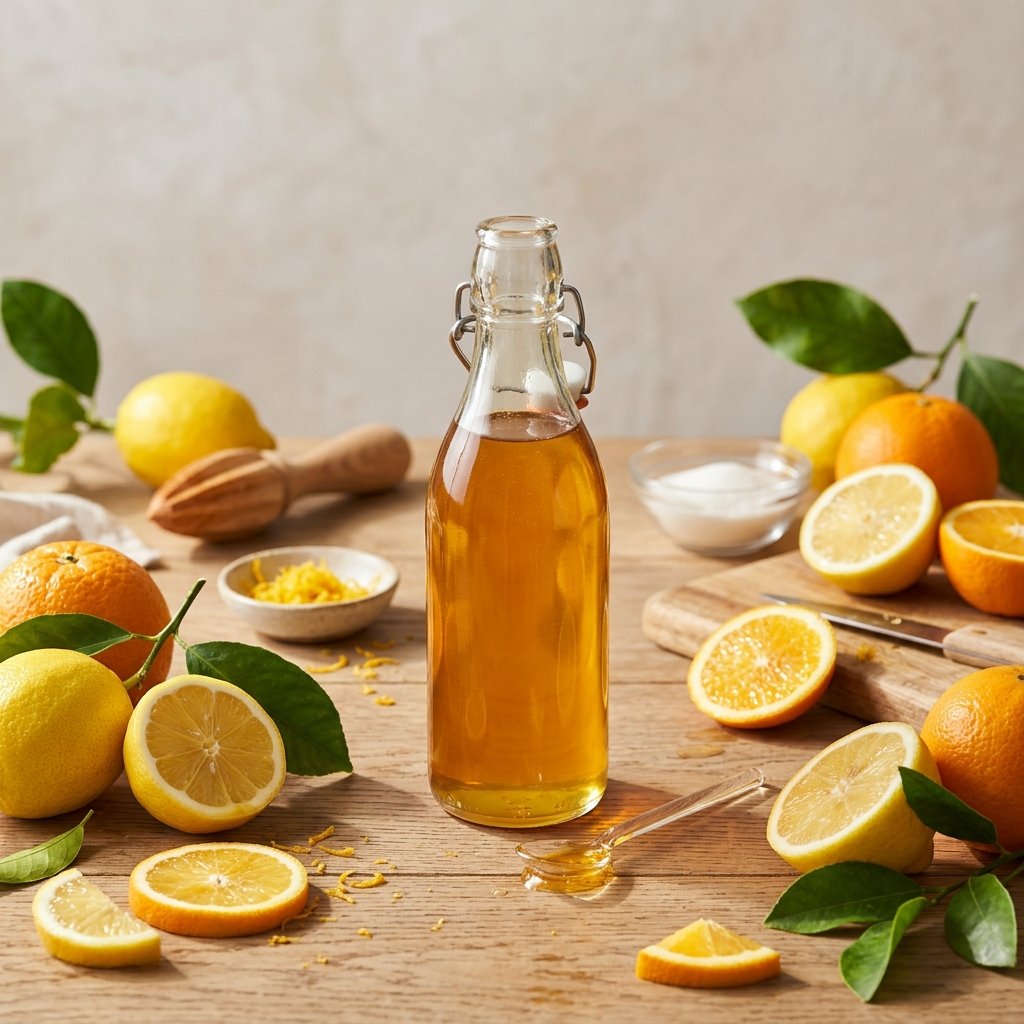
Peeling a whole, firm fruit is much easier than peeling a squeezed half. Use a vegetable peeler to remove wide strips of colored peel from the orange, lemon, and lime, pressing lightly so you leave most of the white pith behind. If a strip comes off thick, lay it flat and scrape the pith away with a paring knife. Then juice the fruit and measure out ½ cup.
2. Dissolve the sugar
Combine the sugar, water, and salt in a small saucepan over medium heat. Stir until the liquid turns completely clear and you no longer feel grains scraping on the bottom of the pan, about 2 to 3 minutes.
3. Simmer the peel gently
Add the peel strips and lower the heat so the syrup barely bubbles. Simmer for 5 minutes. A hard boil reduces the syrup too much, darkens it, and can make the peel taste bitter, so keep it calm.
4. Add the juice off the heat and steep
Take the pan off the burner, stir in the fresh juice, and let everything steep for 30 minutes. For a stronger, more perfumed syrup, steep up to an hour. Taste it at the 30-minute mark and decide.
5. Strain and bottle
Pour the syrup through a fine-mesh strainer into a clean jar or bottle, pressing lightly on the peels to release the last of the syrup. Let it cool to room temperature, seal it, and refrigerate.
The finished syrup looks pale gold and slightly hazy from the juice. That is normal. If you want a crystal-clear syrup for gifting, strain the juice through a coffee filter before adding it, or leave the juice out entirely and make a peel-only citrus simple syrup.
Citrus Syrup Ratios at a Glance
Once you understand the base, it is easy to adjust this citrus syrup recipe for different jobs. Here is a quick guide. Fridge times are rough estimates for a clean, sealed jar; your nose and eyes are the final judge.
| Style | Sugar to water | Fresh juice | Best for | Fridge life |
|---|---|---|---|---|
| Classic (this recipe) | 1:1 | ½ cup | Sodas, iced tea, cocktails | Up to 2 weeks |
| Peel-only citrus simple syrup | 1:1 | None | Coffee, tea, baking | 3 to 4 weeks |
| Rich citrus syrup | 2:1 | None | Stirred cocktails, smaller pours | About 1 month |
| Cake soaking syrup | 1:1 | ¼ cup lemon | Brushing warm cakes | Up to 1 week |
| Light syrup | 1:2 | ¼ cup | Fruit salad, sweet tea | About 1 week |
More sugar means a thicker syrup that keeps longer. More water and more juice mean a fresher taste but a shorter shelf life.
Flavor Variations Worth Trying
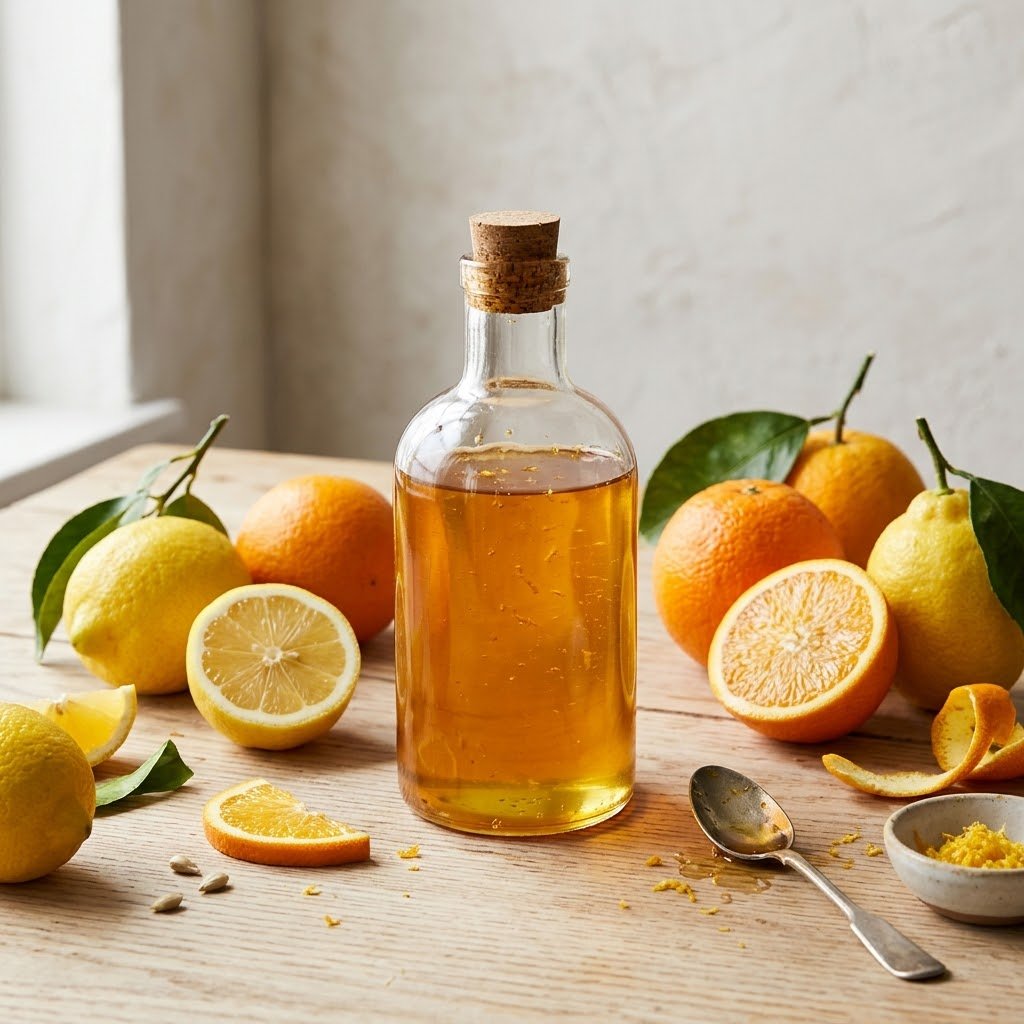
The base syrup is a blank canvas. Add any of these with the peel in step 3, unless noted otherwise. For more ideas on infusing syrups, Food52 has a helpful guide.
- Spiced citrus syrup: 4 lightly crushed cardamom pods, 1 cinnamon stick, or 1 star anise. Great in hot tea and winter cocktails.
- Ginger citrus syrup: a 1-inch piece of fresh ginger, thinly sliced. It adds gentle heat that works well with sparkling water.
- Honey citrus syrup: replace half the sugar with honey and stir it in after the 5-minute simmer so its flavor stays bright. Do not give honey to babies under 12 months old.
- Herb citrus syrup: a sprig of rosemary, a few thyme sprigs, or a handful of mint added during the steep, not the simmer.
- Grapefruit or blood orange syrup: swap the orange for either one. Blood orange gives a rosy color; grapefruit adds a pleasant bitter edge.
- Vanilla citrus syrup: half a vanilla bean, split, makes a softer, dessert-friendly syrup that is lovely over fruit.
How to Use Citrus Syrup
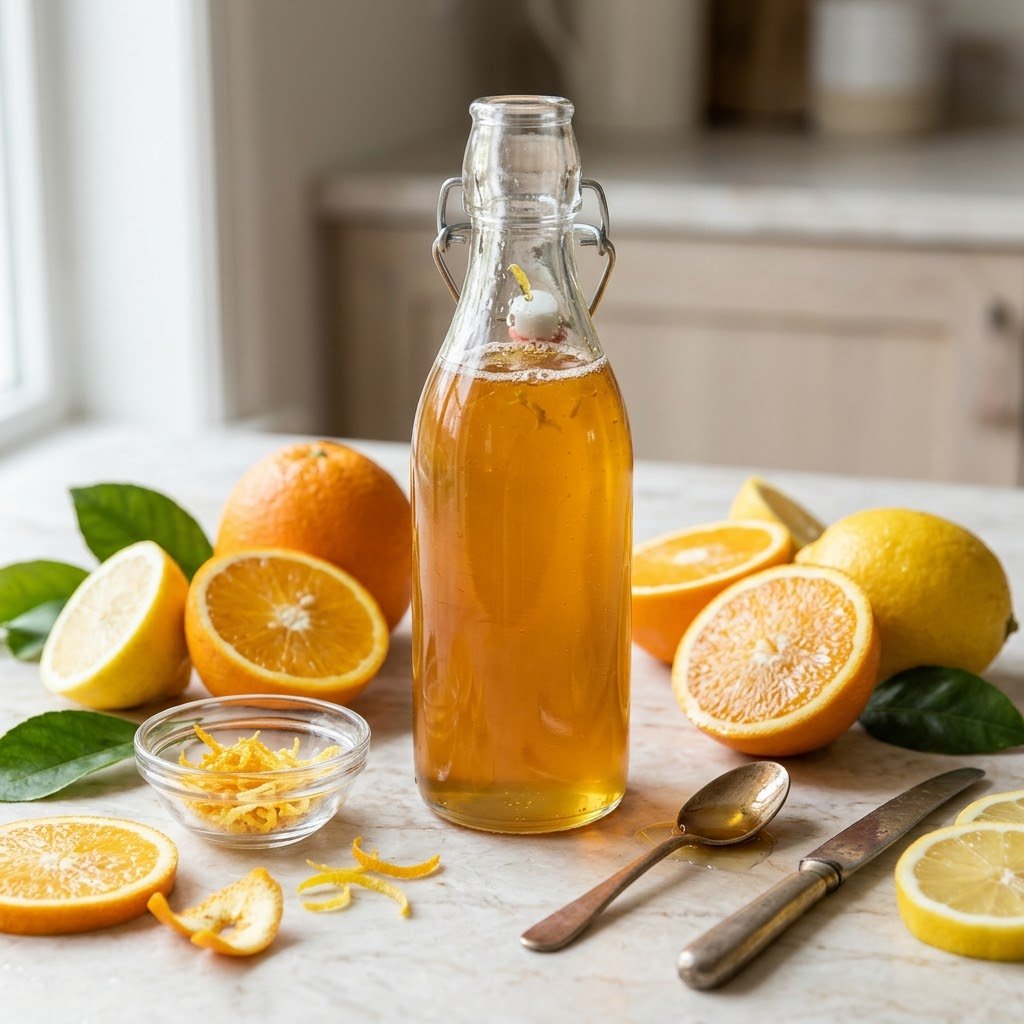
Citrus syrup for cocktails
Use it anywhere a recipe calls for simple syrup and the drink already includes citrus: a whiskey sour, a margarita, a lemon drop, or a gin fizz. Because this syrup contains some juice, you may want to pull back slightly on the fresh lemon or lime in the drink. Start with ½ ounce, taste, and adjust. It also fits nicely into a Bermuda rum swizzle or a mango mojito.
In non-alcoholic drinks
For a quick citrus soda, stir 1 to 2 tablespoons of syrup into 8 ounces of cold sparkling water over ice. It also sweetens iced tea far better than granulated sugar, which tends to sink to the bottom of a cold glass. Try a spoonful in a cucumber lime drink for an extra layer of flavor.
On cakes and desserts
Soaking syrups are how bakeries keep cakes moist for days. Poke a warm cake all over with a skewer, then brush or spoon the syrup over it slowly so it sinks in instead of pooling. It suits pound cakes, olive oil cakes, and orange-scented bakes like this spiced orange bundt cake. You can also dilute the syrup with water and freeze it the same way you would an almond granita for a quick citrus ice.
At breakfast
Drizzle it over pancakes, waffles, or French toast when you want something brighter than maple. It is also good spooned over plain Greek yogurt with berries, or tossed with sliced oranges and pomegranate seeds for an easy winter fruit salad.
Storing Homemade Citrus Syrup
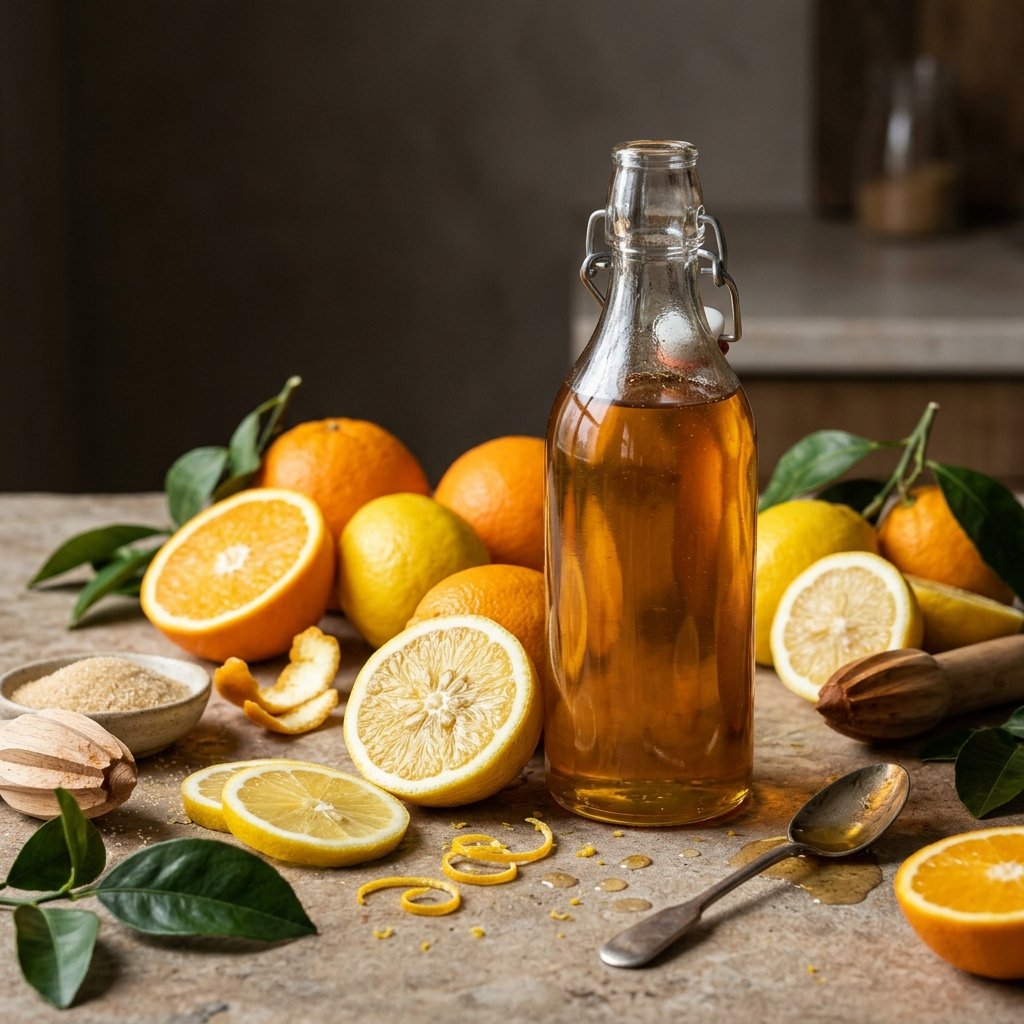
Keep the syrup in a clean, tightly sealed glass jar or bottle in the refrigerator. With fresh juice added, plan to use it within about 2 weeks. A peel-only version usually lasts 3 to 4 weeks. Give the bottle a gentle shake before pouring, since the juice can settle a little.
To keep it longer, freeze the syrup in an ice cube tray, then move the cubes to a freezer bag. They keep well for about 3 months and drop straight into iced tea or lemonade. Throw the syrup away if it turns cloudy in a new way, smells sour or fermented, starts to fizz, or shows any mold.
Common Mistakes to Avoid
- Boiling hard. A rolling boil thickens the syrup, darkens the color, and pulls bitterness from the peel.
- Using bottled juice. It lacks the bright aroma of fresh fruit and often tastes slightly cooked already.
- Leaving thick pith on the peel. A little is fine. A lot makes the syrup taste harsh.
- Not tasting before straining. If it tastes too sweet, add a squeeze of lemon. If it tastes too sharp, stir in a spoonful of sugar while it is still warm.
Citrus Syrup Recipe FAQ
Can I make citrus syrup with just one kind of fruit?
Yes. For a straight lemon syrup, use the peel of 2 lemons and ½ cup lemon juice. For orange syrup, use the peel of 1 large orange and ½ cup orange juice, plus 1 tablespoon lemon juice so it does not taste too mild. Lime alone is quite sharp, so many people like to soften it with a little orange.
Can I use brown sugar or another sweetener?
Light brown sugar makes a darker syrup with a gentle caramel note that suits orange and warm spices. It can overpower lime. Sugar substitutes such as allulose or monk fruit blends can work, but the texture is usually thinner and results vary by brand, so make a small batch first.
Why did my syrup crystallize?
Usually a few undissolved sugar crystals got into the jar, or you made a rich 2:1 syrup that set up in the cold. Warm it gently with a tablespoon of water and stir until it turns clear again.
How much does this citrus syrup recipe make?
About 1½ cups (360 ml), which is roughly 24 tablespoons. That is plenty for a couple of weeks of drinks or for soaking one large cake.
Is citrus syrup the same as citrus cordial?
They are close cousins. Cordials tend to contain more juice and sometimes added citric acid, and they are almost always diluted before drinking. Citrus syrup is sweeter and more concentrated, so a little goes a long way.
Keep a bottle of this citrus syrup recipe in the fridge and you will find yourself reaching for it more than you expect. Make the classic version first, then play with the spiced and herb variations once you know how you like it.
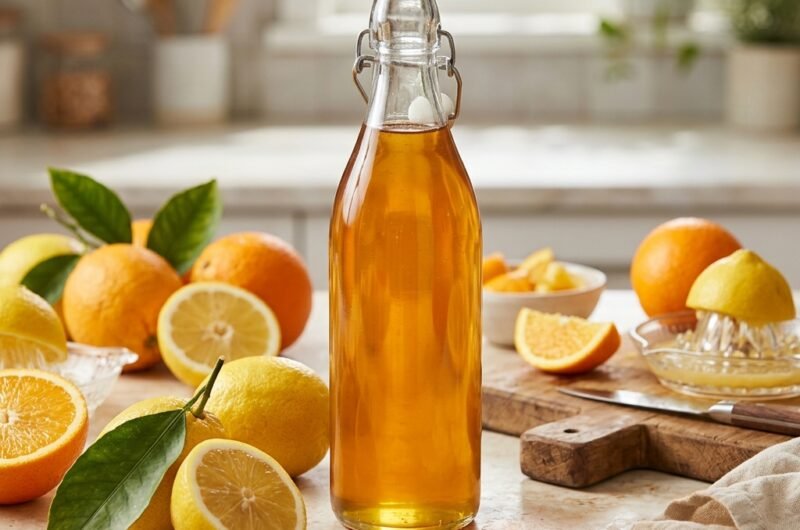
Easy Citrus Syrup (Orange, Lemon and Lime)
A bright homemade citrus syrup made with orange, lemon, and lime peel plus fresh juice. Use it in cocktails, sparkling water, iced tea, and as a soaking syrup for cakes.
24
tablespoons10
minutes10
minutes50
minutesIngredients
- For the syrup
1 cup (200 g) granulated sugar
1 cup (240 ml) water
1 tiny pinch salt (optional)
- For the citrus
1 orange, washed and dried
1 lemon, washed and dried
1 lime, washed and dried
½ cup (120 ml) fresh citrus juice (about ¼ cup orange, 3 tablespoons lemon, 1 tablespoon lime)
Directions
- Peel the fruit
Use a vegetable peeler to remove wide strips of colored peel from the orange, lemon, and lime, leaving most of the white pith behind. Scrape off any thick pith with a paring knife. Juice the fruit and measure ½ cup. - Dissolve the sugar
Combine the sugar, water, and salt in a small saucepan over medium heat. Stir until the liquid is completely clear, 2 to 3 minutes. - Simmer the peel
Add the peel strips and lower the heat so the syrup barely bubbles. Simmer gently for 5 minutes without boiling hard. - Add the juice and steep
Remove the pan from the heat, stir in the fresh citrus juice, and let the syrup steep for 30 minutes (up to 1 hour for a stronger flavor). - Strain and store
Strain through a fine-mesh sieve into a clean jar or bottle, pressing lightly on the peels. Cool to room temperature, seal, and refrigerate for up to 2 weeks.
Notes
- For a clear syrup, strain the juice through a coffee filter before adding it, or skip the juice for a peel-only citrus simple syrup that keeps 3 to 4 weeks in the fridge.
- Spiced version: add 4 crushed cardamom pods, 1 cinnamon stick, or 1 star anise with the peel.
- For cocktails, start with ½ ounce of syrup per drink and adjust, since the syrup already contains some juice.
- Freeze in an ice cube tray for up to 3 months.
- Do not give the honey variation to babies under 12 months old.