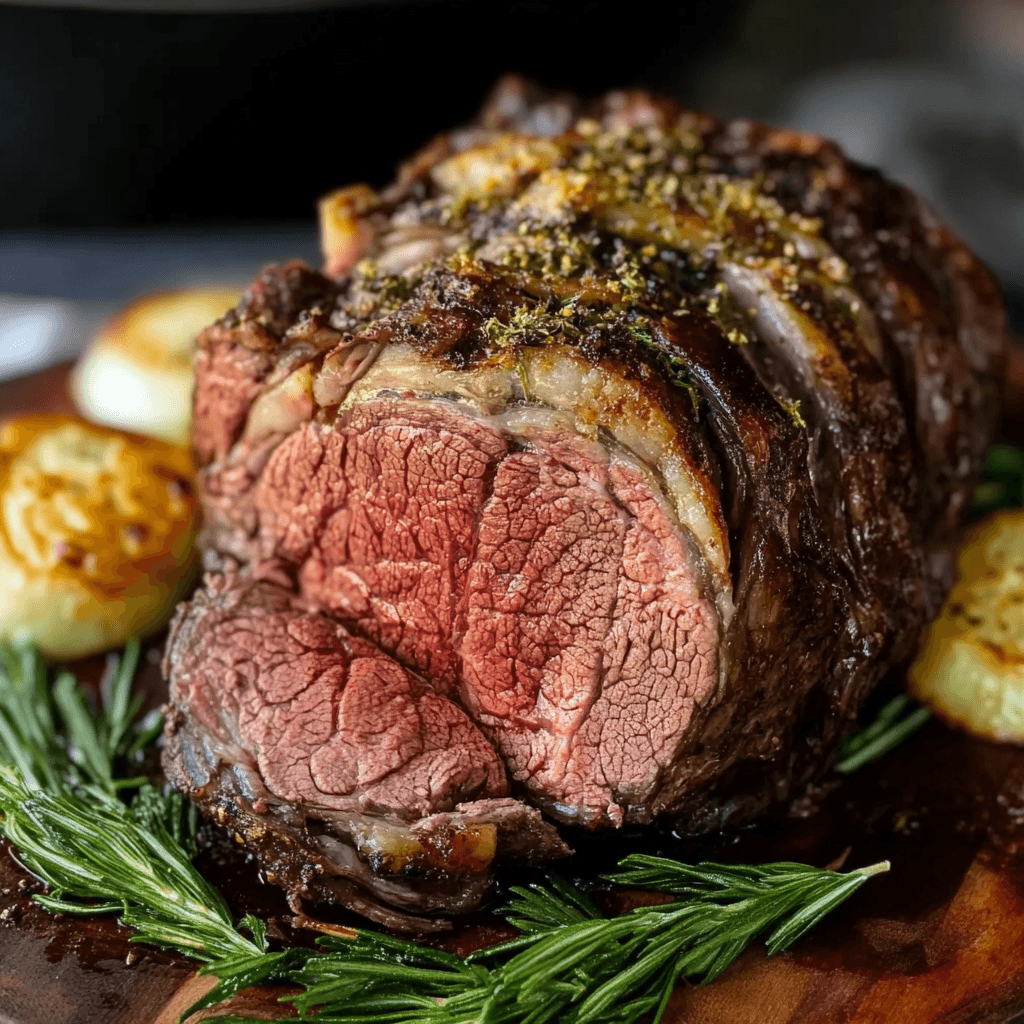
A rib eye roast is the cut you buy when the table matters. It is the boneless cousin of prime rib, with the same rich marbling and buttery flavor, and it slices into neat, tender rounds. This rib eye roast recipe uses a garlic and rosemary rub and the reverse sear method: roast slowly at low heat, then finish at high heat for a deep brown crust. It takes about three hours, mostly hands-off, and it feeds a crowd.
Pick the Roast
A rib eye roast, also sold as a boneless rib roast, comes from the rib section of the cow, the same area as prime rib, but without the bones. The marbling is what makes it tender and flavorful. Plan on about ½ pound per person, so a 4 to 5 pound roast serves 6 to 8. Ask the butcher to tie it so it keeps an even shape, and look for a good fat cap and plenty of fine white marbling.
Take the roast out of the fridge about an hour before cooking so the center is not ice cold, but never leave raw meat out for more than 2 hours.
The Reverse Sear, Explained
Most roasts are seared first and roasted second. The reverse sear flips that: you cook the roast low and slow at 250°F until it is close to done, then finish it with high heat. Slow roasting cooks the meat evenly from edge to center, with very little gray band, and the final blast gives you a crisp, browned crust. It is also forgiving, because low heat gives you a wider window to hit the temperature you want.
The Rib Eye Roast Recipe, Step by Step
Serves 6 to 8, with about 15 minutes of prep, 2 to 3 hours of roasting, and 20 to 30 minutes of resting.
What You Need
- 1 (4 to 5 lb) boneless rib eye roast, tied
- 4 garlic cloves, minced
- 2 tablespoons fresh rosemary, chopped
- 2 tablespoons olive oil
- 1 tablespoon coarse sea salt and 1 tablespoon black pepper
- 1 teaspoon smoked paprika (optional)
- A probe or instant-read thermometer, which is the most important tool here
Method
- Season ahead (optional, but worth it). The day before, rub the salt over the roast and refrigerate it uncovered on a rack. The salt seasons the meat deeply and dries the surface for a better crust. If you skip this, take the roast out of the fridge about an hour before cooking.
- Heat the oven to 250°F (120°C).
- Mix the seasoning. Stir the garlic, rosemary, olive oil, pepper, and paprika together (and the salt, if you did not season ahead). Pat the roast dry and rub the mixture over the whole surface.
- Roast low and slow. Set the roast on a rack in a roasting pan, fat side up, and push a probe thermometer into the thickest part. Roast until it reaches the pull temperature in the doneness guide below, for example 115 to 120°F for medium-rare. This usually takes 2 to 3 hours, so start checking at 2 hours.
- Sear. Take the roast out and tent it loosely with foil while the oven heats to 500°F (260°C). Return it for 8 to 12 minutes, until the crust is deep brown. Watch it closely, since the temperature climbs during this step.
- Rest. Let the roast rest for 20 to 30 minutes before slicing, so the juices settle back into the meat.
Doneness: When to Pull the Roast
The temperature keeps climbing during the sear and the rest, so you pull the roast before it reaches the final temperature. The USDA’s safe temperature chart lists 145°F with a 3-minute rest as the safe minimum for beef roasts. Cooking to a lower doneness is a personal choice that carries more risk, especially for pregnant women, young children, older adults, and anyone with a weakened immune system.
| Doneness | Pull from the oven at (before the sear) | Final temperature after resting |
|---|---|---|
| Rare | 105 to 110°F | About 120 to 125°F |
| Medium-rare | 115 to 120°F | About 130 to 135°F |
| Medium | 125 to 130°F | About 140 to 145°F |
| Medium-well | 135°F | About 150°F |
These numbers are approximate and vary with the size of the roast and your oven, so rely on a probe thermometer.
Holiday Countdown
- The day before: salt the roast, set it on a rack, and refrigerate it uncovered.
- About 3½ hours before dinner: take the roast out of the fridge for an hour and heat the oven to 250°F.
- About 3 hours before: season the roast and put it in the oven with the probe in place.
- About 45 minutes before: take it out, tent it with foil, and heat the oven to 500°F. Return it for the sear.
- The last 30 minutes: let the roast rest while you make the horseradish cream and finish the sides.
Leftovers and Storage
- Fridge: refrigerate leftovers within 2 hours, in an airtight container, and eat them within 3 to 4 days.
- Reheating: warm slices gently in a skillet with a splash of beef broth so they stay moist. The USDA advises reheating leftovers to 165°F.
- Freezing: wrap the roast tightly in plastic wrap and foil and freeze for up to 3 months. Thaw it in the refrigerator.
- Leftover ideas: thin slices make excellent sandwiches with horseradish cream, or can go into salads, hash, or soup.
Carving and a Quick Sauce
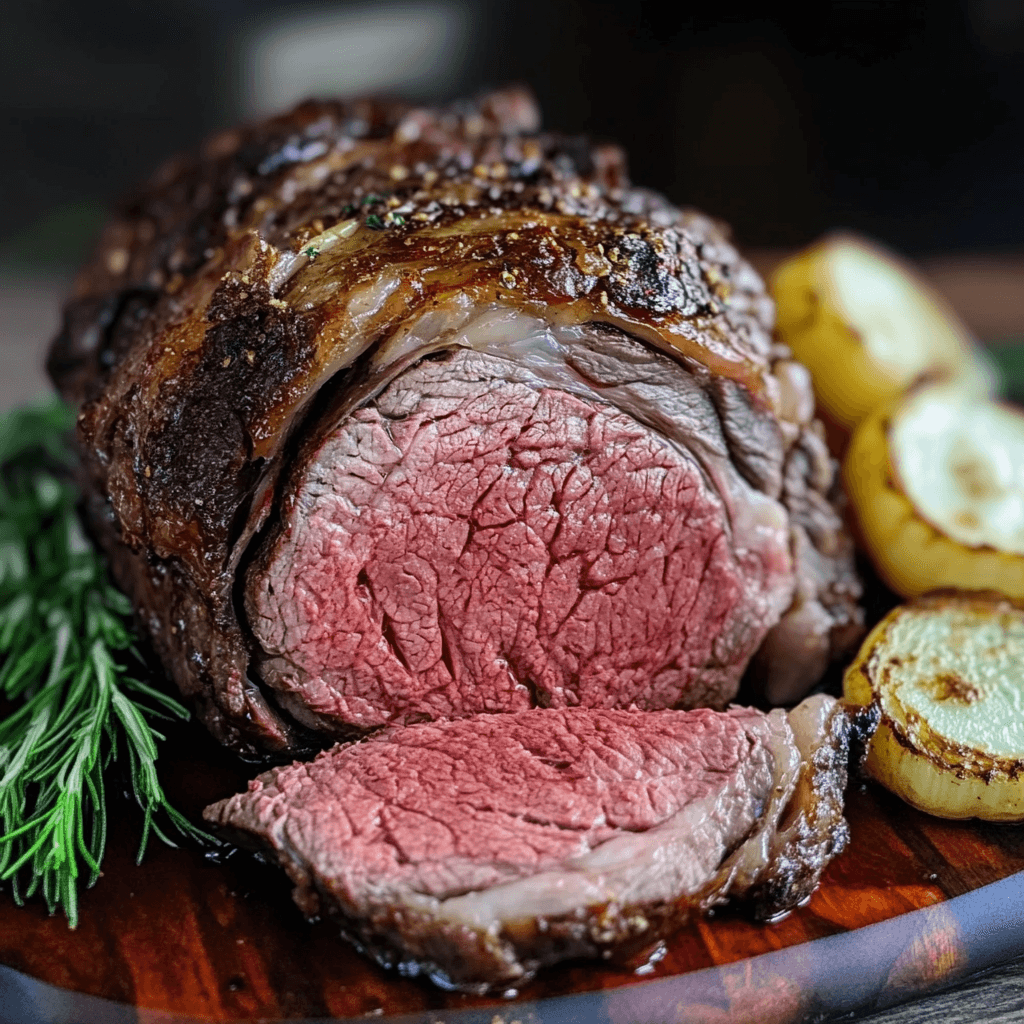
Remove the kitchen string, and slice the roast across the grain into slices about ½ inch thick, using a long, sharp knife. Cutting across the grain shortens the muscle fibers, so each slice is more tender. Pour any resting juices over the sliced meat.
Horseradish Cream
While the roast rests, stir ½ cup of sour cream with 2 to 3 tablespoons of prepared horseradish, 1 teaspoon of lemon juice, a pinch of salt, and a spoonful of chopped chives. Chill it until serving. It is the classic partner for roast beef, and it comes together in two minutes.
Rib Eye Roast Recipe Card
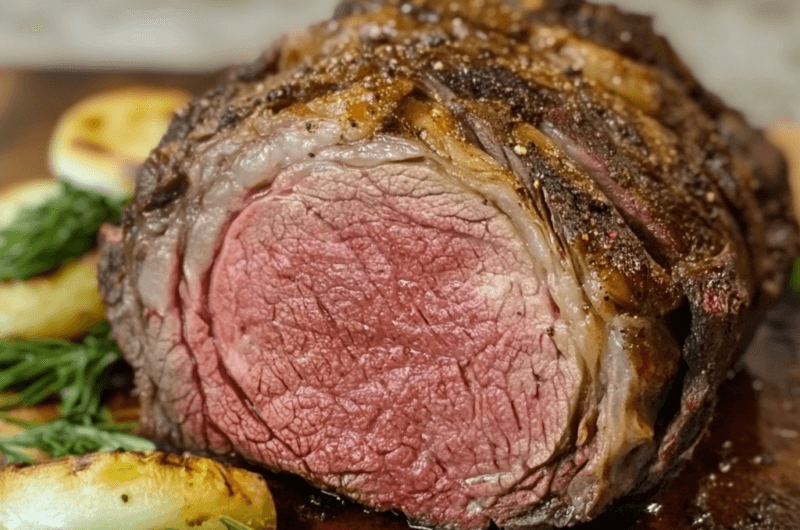
Rib Eye Roast Recipe – Tender and Juicy
Course: MainCuisine: AmericanDifficulty: Medium6-8
servings15
minutes3
hours400-500
kcalThe Rib Eye Roast is a tender, juicy, and flavorful roast made with a simple garlic-rosemary seasoning. Perfect for special occasions or a hearty family meal!
Ingredients
1 (4-5 lb) rib eye roast
4 cloves garlic, minced
2 tbsp fresh rosemary, chopped
2 tbsp olive oil
1 tbsp coarse sea salt
1 tbsp black pepper
1 tsp smoked paprika (optional, for extra flavor)
Directions
- Preheat the Oven: Preheat your oven to 250°F (120°C). This low temperature is key to achieving a tender roast.
- Prepare the Seasoning: In a small bowl, mix the minced garlic, chopped rosemary, olive oil, salt, black pepper, and smoked paprika (if using).
- Season the Roast: Pat the rib eye roast dry with paper towels. Rub the seasoning mixture evenly over the entire surface of the roast.
- Roast the Meat: Place the roast on a rack in a roasting pan, fat side up. Insert a meat thermometer into the thickest part of the roast. Roast in the preheated oven until the internal temperature reaches 120°F (49°C) for medium-rare, about 2.5-3 hours.
- Sear the Roast: Increase the oven temperature to 500°F (260°C). Return the roast to the oven for 10-15 minutes, or until the exterior is golden brown and crispy.
- Rest and Serve: Remove the roast from the oven and let it rest for 20-30 minutes before slicing. This allows the juices to redistribute, ensuring a moist and flavorful roast.

Notes
- For best results, use a meat thermometer to ensure the roast is cooked to your desired doneness.
Let the roast rest for at least 20 minutes before slicing to lock in the juices.
Leftovers can be used for sandwiches, salads, or soups.
Make It Yours: Six Twists
- Herb butter: rub the roast with softened butter mixed with rosemary, thyme, and garlic before roasting.
- Coffee and cocoa rub: blend ground coffee, unsweetened cocoa, brown sugar, smoked paprika, and a little cayenne for a deep, smoky crust.
- Smoked: smoke it at 225 to 250°F with hickory, oak, or cherry wood until it reaches the pull temperature, then sear. Our wood pellet grill recipes have more on pellets.
- Garlic Parmesan crust: press a mixture of garlic, grated Parmesan, and breadcrumbs onto the roast for the last 10 minutes of the sear.
- Balsamic drizzle: simmer balsamic vinegar until syrupy and drizzle it over the sliced beef.
- Asian-style marinade: marinate the roast for several hours in soy sauce, honey, ginger, garlic, and sesame oil, then pat it dry before roasting. Do not reuse the raw marinade as a sauce unless you boil it first.
What to Serve With It
- Potatoes: garlic mashed potatoes soak up the juices.
- Vegetables: roasted carrots, Brussels sprouts, or asparagus.
- Rice: our creamy steakhouse-style rice is a rich option.
- A starter: keep guests happy with our cranberry phyllo cups or spinach dip while the roast rests.
- To drink: a bold red such as Cabernet Sauvignon or Merlot suits the rich beef.
A good rib eye roast rewards patience: low heat, a thermometer, a hot finish, and a long rest. Do those four things and it turns out right nearly every time. If you make this rib eye roast recipe, leave a comment and tell me how you served it.
More Dinner Ideas
- Ham Press Recipes: A Glazed Ham, another holiday main for a crowd
- Easy Wood Pellet Grill Recipes, if you want to smoke your next roast
- Salisbury Steak Recipe With Ground Chicken, a lighter weeknight dinner