Pastry flour is the quiet reason some pie crusts shatter at the first bite while others turn out tough. It sits between all-purpose and cake flour in protein, which means less gluten, more tenderness, and a crust you can cut with a fork. Most pastry flour recipes are really about technique: cold butter, a gentle hand, and a rest in the fridge. Below you will find a basic crust to build on, how to mix your own pastry flour if your store does not carry it, and what to put inside.
Pastry Flour Recipes 101: Why the Flour Matters
Flour is mostly a story about protein. When flour meets water, its proteins form gluten, which makes bread chewy and pie crust tough. Pastry flour has less protein than all-purpose flour, so it forms less gluten and gives you a crust that is tender and flaky instead of chewy. It is also finely milled and usually made from soft wheat.
| Flour | Protein (typical range) | Best for |
|---|---|---|
| Cake flour | 6 to 8% | Tender cakes |
| Pastry flour | 8 to 10% | Pie crust, tart shells, biscuits, cookies |
| All-purpose flour | 10 to 12% | Everyday baking |
| Bread flour | 12 to 14% | Yeast breads |
Numbers vary by brand, so treat these as ranges rather than promises. For a closer look at how pastry flour differs from cake flour, see this comparison from MasterClass.
No pastry flour? Mix equal parts all-purpose flour and cake flour (½ cup of each for every cup of pastry flour), or use a scant cup of all-purpose flour plus 2 tablespoons of cornstarch per cup. Do not confuse it with whole wheat pastry flour, which is a whole-grain product with a different texture.

A Basic Pie Crust, Made With Pastry Flour
This is the foundation behind most pastry flour recipes for pies and tarts. It makes enough for one 9-inch crust with a little extra to trim. A covered pie needs about double.
Mix
Whisk 2 cups of pastry flour with 1 tablespoon of sugar and a pinch of salt. Add ½ cup of cold, cubed butter and cut it in with a pastry cutter or your fingertips until the mixture looks like coarse crumbs, with some pea-sized pieces of butter left. Those pieces melt in the oven and leave behind the flaky layers. Sprinkle in 4 to 5 tablespoons of cold water, one tablespoon at a time, and mix until the dough just holds together when you press it.
Chill and Roll
Shape the dough into a disk, wrap it, and chill it for at least 30 minutes so the butter firms up and the gluten relaxes. Roll it out on a lightly floured surface to about ⅛ inch thick, lay it in your pie dish without stretching it, and trim the edges.
Bake
If your filling needs a pre-baked crust, line the dough with parchment, fill it with pie weights, and bake at 375°F (190°C) for 10 to 15 minutes. Remove the weights and bake for 5 more minutes, until pale golden. If the filling bakes inside the crust, fill the raw crust and follow the filling recipe.
Fillings That Suit It
Fruit. Berries, sliced apples, or stone fruit, tossed with a little sugar and cornstarch so the juices thicken. For tarts with a raw or custard-style filling, pre-bake the crust.
Custard and cream. Eggs and vanilla make silky fillings for custard tarts and quiche-style pies. Blind baking the crust first keeps it crisp underneath.
Chocolate. A pre-baked shell holds a rich ganache or chocolate cream filling well.
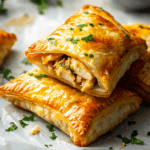
Savory. The same crust works as the base for a quiche or a chicken pot pie. For a handheld version, see our chicken pastry recipe.
Crust Problems, Fixed
It is tough. The dough was overworked or had too much water. Handle it as little as you can, and add water one tablespoon at a time.
It shrinks in the pan. Stretched dough springs back in the oven. Ease it into the dish without pulling, and let it rest in the fridge for 15 to 30 minutes before baking.
It is not flaky. The butter melted into the flour. Keep it cold, leave some pea-sized pieces in the dough, and chill the dough before rolling.
The bottom is soggy. Blind bake the crust for wet fillings, bake on a lower oven rack, and brush the warm crust with a thin layer of beaten egg white before filling.
It cracks when you roll it. The dough is too cold or too dry. Let it sit at room temperature for 5 to 10 minutes, or work in a few more drops of water.
Making Dough Ahead
Pie dough keeps well. Wrap the disk tightly and refrigerate it for up to 2 days, or freeze it for up to 3 months and thaw it overnight in the fridge. A baked shell can sit covered at room temperature for a day, and fruit pies taste best on the day they are baked.

Pastry Flour Recipes Card: Basic Pie Crust

Best Pastry Flour Recipes for Perfect Pies and Tarts
Course: DessertCuisine: AmericanDifficulty: Easy8-10
servings15
minutes30
minutes180
kcalIngredients
Pastry Flour: The hero ingredient for tender crusts.
Butter: The key to that rich, flaky texture.
Sugar: Adds sweetness to the crust and filling.
Eggs: Used to bind the dough and in many fillings.
Fresh Fruit/Other Fillings: Choose your favorite, like berries, apples, or chocolate for an indulgent treat.
Salt: Enhances the flavors.
Vanilla Extract: For that irresistible aroma.
Directions
- Combine the Dry Ingredients: In a large mixing bowl, combine 2 cups of pastry flour, 1 tablespoon of sugar, and a pinch of salt.
- Cut in the Butter: Cut in 1/2 cup of cold, cubed butter into the flour mixture using a pastry cutter or your hands. The goal is to make the mixture resemble coarse crumbs.
- Add Water: Slowly add 4-5 tablespoons of cold water, one tablespoon at a time, mixing until the dough starts to come together. You may need to add a bit more water depending on your dough’s consistency.
- Chill the Dough: Form the dough into a ball, wrap it in plastic wrap, and refrigerate it for at least 30 minutes. This helps it firm up and makes it easier to roll out.
- Roll Out the Dough: On a lightly floured surface, roll out the dough into a 1/8-inch thick circle. Place it in your pie dish, and trim the edges.
- Blind Bake (Optional): If your recipe calls for a pre-baked crust, line the crust with parchment paper, fill with pie weights, and bake at 375°F for 10-15 minutes. Remove weights and bake for another 5 minutes.
Before You Go
Start with the crust above and get comfortable with it, then use it for whatever is in season. If you only remember one thing from these pastry flour recipes, make it this: keep everything cold and handle the dough as little as possible. And if you try it, tell me in the comments what you filled yours with.
More From the Oven
- Chicken Pastry Recipe, a savory way to use puff pastry
- Cranberry Phyllo Cups, little pastry shells with a tart filling
- Braided Chocolate Chip Brioche, for when you want a yeasted dough instead